Most Australians insist that newcomers accept our core civic culture — the single secular legal system, equality before the law, free speech, and the rejection of parallel jurisdictions. Hardly realised in Australia, but at least these are worthy ideals. Of course, these ideals are not incompatible with Islam. Large numbers of Muslims already live by these rules in Australia and elsewhere without difficulty.
In his recent conversations with Glenn Diesen (including the 1 August 2026 ‘Middle East in Transition’ discussion) and in related remarks, retired American diplomat Chas Freeman argues that the current behaviour of the United States and its closest partners — unilateral military action, disregard for sovereignty, and the erosion of international law — is the antithesis of the best of this Western tradition.
Chas Freeman identifies it as based on Westphalian principles established in 1648: the sovereign equality of states, non-interference in internal affairs, and the right of different societies to organise themselves according to their own values. These principles, he notes, are the West’s most important gift to the modern international system.
Chas Freeman’s further claim is that these same principles are now being taken up and applied more consistently by non-Western powers and the broader Global South most clearly in China’s ‘Five Principles of Peaceful Coexistence’ and in the emerging multi-nodal order. In his view, the West is abandoning its own best inheritance while others are carrying it forward.
Certainly, there is more than one way to be civilised and to do good, which for me starts with being honest and kind and not stealing what others own and not deliberately corrupting a written record whether that be of historical temperatures or something else. It necessarily means a respect for evidence, and from that derives a notion of truth. It means having some order, to your own life and contributing to the same within your community more generally.
I try and begin every day with some sun salutations — the classic yoga sequence that comes not from any Western tradition by from Hindu civilisation. The combination of physical exertion, controlled breathing and focused attention has many benefits. It requires me to get down on the floor which is also grounding.
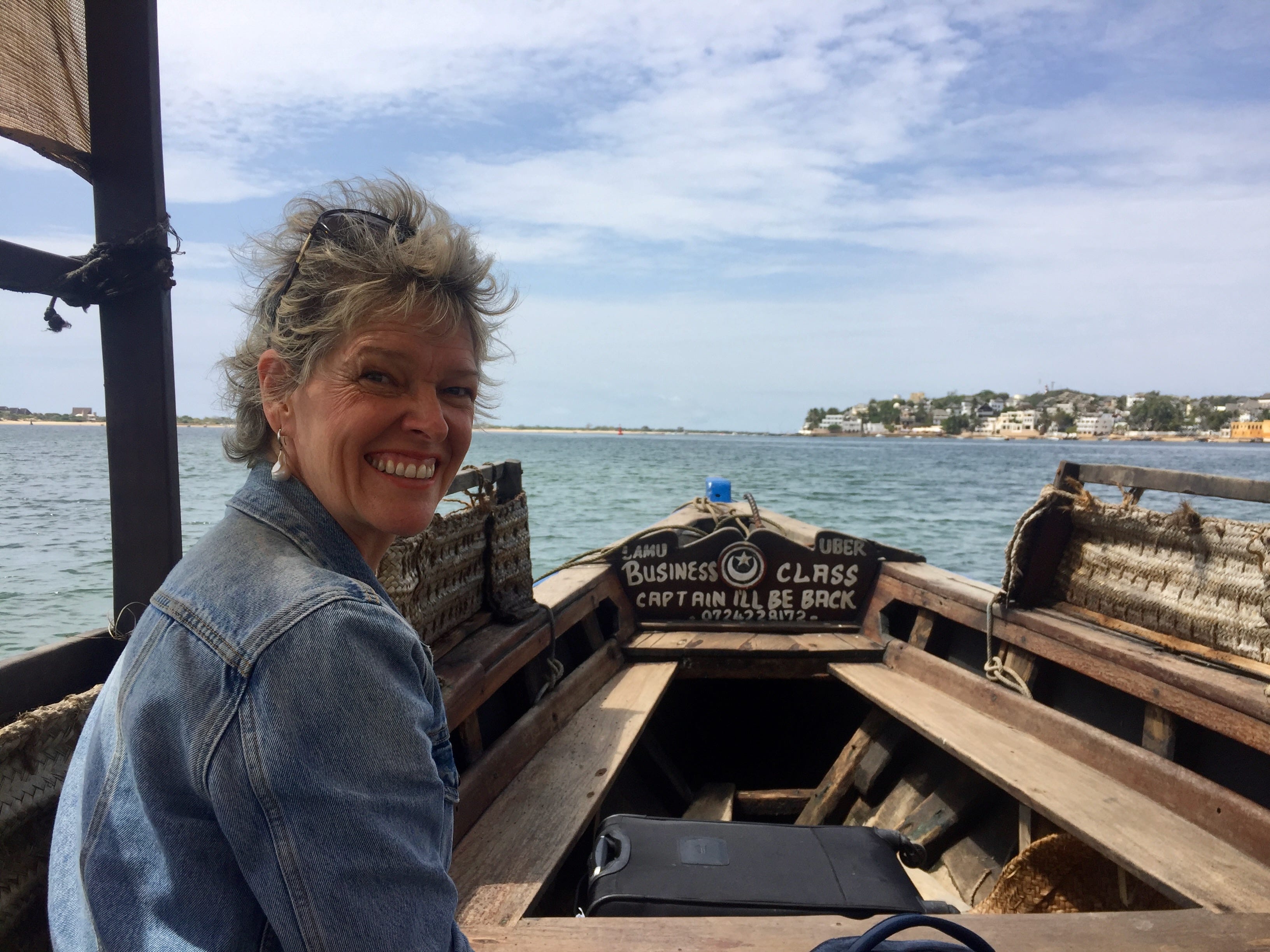
So, I’m a cultural Christian, who does an exercise routine each morning that draws from the Hindu tradition because I find it beneficial with no equivalent in my own tradition. I’ve performed this same routine on the beach at a place called Lamu, it’s an island just off the coast of northeast Africa — a place of dhows, whitewashed buildings and a population that is overwhelmingly Sunni Muslim. In March 2018, I was at the annual Lamu Yoga festival, doing sun salutes with Muslim women and sharing the benefits. They may have been no more Muslim than I am Christian, but certainly they were civilised and looking to find a way to improve their own lives while contributing to a better world.
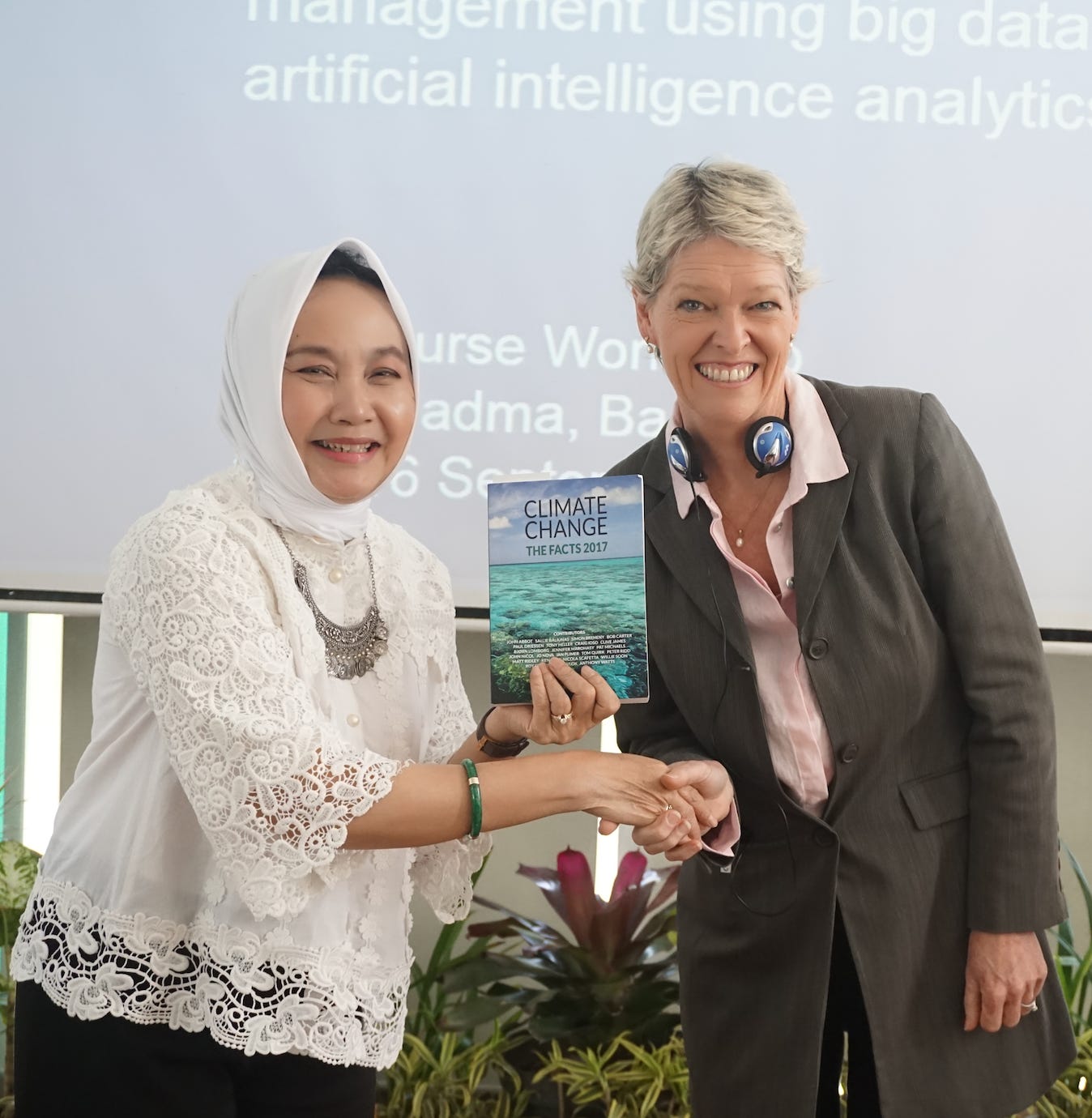
Later that same year, October 2018, in Indonesia I trained meteorologists and worked with the former head of BMKG, the national meteorological service. Many of the women wore hijab; the men often dressed in batik or formal shirts that reflected local custom. We discussed data, forecasting and climate, and as I explained recently at my blog, there was a fascination with in The West, key institutions homogenise historical temperature data.
The collaboration was practical, mutually useful and free of the demand that one side convert the other, but certainly there was a shared sense of purpose.
It doesn’t matter the culture, or which generation within that culture, we all share a sense of fairness. From around two or three years of age, children in societies across the world already protest when rewards or attention are handed out unequally; the reaction is spontaneous, reliable, and appears long before any formal teaching of justice.
A concern for truth — for honesty and that the evidence be accurate — also emerges early and is strongly socialised in most cultures.
This knowledge would be ordinary in a connected world, yet it increasingly sits awkwardly with a mood that is emerging here in Australia, and especially in the country we have historically followed into the next war, the United States. Islamophobia is on the rise.
Ten years ago, Freeman delivered the talk titled ‘The End of the American Empire.’ He argued that the United States had overreached, treating most of the globe as its sphere of influence, launching wars without achievable political goals, and substituting force for diplomacy. The result was strategic failure, domestic costs and the steady erosion of American prestige. Re-reading the speech in 2026, the diagnosis has held up remarkably well.
Freeman wrote as a career foreign-service officer—ambassador to Saudi Arabia during the Gulf War, assistant secretary of defense—not as a progressive idealist. His point was practical: you cannot indefinitely manage other civilisations by force or by assuming your own values are automatically universal. When you try, you breed resentment, empower adversaries and neglect your own house. His more recent conversation with Glenn Diesen simply updates the same themes to the present confrontation with Iran and the emergence of a multinodal order in which no single power can dictate outcomes.
This is ever more obvious with the war against Iran. At the beginning of the weekend President Trump was promising annihilation (again), my Iranian friends were bracing, the Iranian military apparently pulling back from its coastline expecting bombardment and the first landing of US ground troops. At the same time, the Iranian Foreign Minister Seyed Abbas Araghchi, was busy with telephone diplomacy. At his Telegram fed, there were regular updates, who he had spoken the topic of discussion. Mostly it was neighbouring countries, twice it was reported that he spoke with Faisal bin Farshan, the Minister of Foreign Affair of Saudi Arabia, and also General Qama Javed Bajwa, the Chief of Army Staff of Pakistan. The Iranian government makes such information publicly available. It also makes it clear that the Foreign Minister was quietly promising Iranian retaliation against Saudi energy and water infrastructure if the US went ahead with the landing of the ground troops.
According to western media, the Saudi’s told Donald Trump to back off, and he did. It was also explained that the escalation would not change Iran’s control of the Strait of Hormuz. None of this was news at the Australian Broadcasting Corporation (the ABC), that like the BBC, CNN, etcetera, needs to be understood as essentially an extension of a particular type of propaganda, with US/Jewish interests controlling the narrative with implications for foreign and domestic policies here in Australia.
The Greens have correctly labelled Labor, the Coalition and One Nation the ‘three war parties’ precisely because of their shared willingness to back US-led actions against Iran. This reflects traditional alliances, and our past willingness to support the invasions of Syria, Iraq, Libya and before that Vietnam and quoting Freeman other earlier imperial actions. He mentions the 1854 treaty ports in China and Japan, the 1893–98 takeover of Hawaii, the 1898 Spanish-American War seizures, the contest for Samoa, and the later occupations of Nicaragua, the Dominican Republic, parts of Mexico and Haiti.
The leader of One Nation, Pauline Hanson, not only very publicly supports the US in all its current warring, but she has also called for Australia to proactively offer help and ‘stamp out evil,’ and the party has voted with the Coalition on motions supporting the current US/Israel war effort against Iran.
More recently One Nation has made headlines again proposing: Australia is multiracial but must be monocultural—one language, one set of laws, one cultural umbrella.
I agree that a confident nation can and should define the terms of belonging, but I’m not sure if the word monocultural is the right one.
As Hanson herself has said, Australian culture is not an ethnic purity test. It is the combination of English as the public language, the Westminster-derived system of parliamentary democracy and common law, equality before a single secular legal code, the practical egalitarianism of the ‘fair go,’ individual liberty including free speech, and the rejection of parallel jurisdictions or theocratic supremacy.
Everyday life—sport, humour, food, informality—can remain open under that umbrella. At least that is the ideal.
Hanson insists that what cannot is the importation of practices or ideologies that treat Australian law as optional. This is civic clarity, not hostility. And it is precisely here that Freeman’s argument becomes most useful rather than threatening in the context of the need for tolerance and understanding.
Respect for Islam, in the sense he uses it, is not moral equivalence or cultural surrender. It is recognition of durable civilisational realities. Roughly one-fifth to one-quarter of humanity is Muslim. Islamic societies possess deep historical roots and will continue to organise around their own identities and interests. Attempts to remake them by force or by assuming they will simply adopt Western models have repeatedly failed and produced more enemies than converts. Reciprocal violence does not end the problem; it enlarges it.
I was just this morning reading the latest Telegram post from my favourite Iranian musician Ali Ghamsari. Long a critical of his own government and advocate for women’s rights, he nevertheless warns again against the destruction of the country’s infrastructure, “If a country loses a significant portion of its infrastructure, its transportation networks, its southern regions, its energy resources, or its strategic position, will it be easier or more difficult to achieve freedom and prosperity?”
He continues, “If, one day, a foreign military power, not a domestic movement, becomes the determining factor in Iran’s destiny, will it truly relinquish power to a domestic movement afterwards? Or will domestic movements only be useful to them until they cross the gates of the fortress?”
He goes on to write that Iran is a country with millions of people with different beliefs and orientations.
Indeed, the Jewish community in Tehran is the largest outside Israel. Current estimates put the number of Jews in Iran at perhaps 15,000, with a significant concentration in Tehran. There are multiple synagogues nationwide, a Jewish hospital, schools and other institutions. Judaism is an officially recognised minority religion within Iran and there is a reserved seat in parliament. The Christian community is larger. Official figures for the recognised Armenian and Assyrian/Chaldean groups are in the range of 100,000–150,000. Broader estimates that include converts (many of them in house churches) are considerably higher.
I have sat on yoga mats in majority-Muslim Lamu and worked with Indonesian meteorologists who dress according to their own piety. Neither experience required me to abandon Australian habits or values. Both showed that different ways of being can coexist when the ground rules are clear and the expectation of mutual respect is genuine. Freeman’s 2016 speech remains relevant because it refused both illusions—endless confrontation and vague multiculturalism that treats every demand as equal. Ten years later the costs of ignoring civilisational realities are still being paid with the war in Iran entering its sixth month and the Strait of Hormuz now closed.
Australia can hopefully learn the lesson without repeating the mistakes, we must not continue to blindly follow the US/Israeli alliance that as one of their greatest living diplomates, Chas Freeman, has repeatedly explained is in decline and increasingly on the wrong side of all that realistically represents the best of the western tradition.
Chas Freeman’s speech from a decade ago (The End of American Empire) can be downloaded here:
His recent discussion (Middle East in Transition and a New World Order) with Glen Deissen is here:
The first image is of me getting a ride on a boat from the airport at Manda across to the island. The second image shows me with the head of Indonesia’s equivalent of our Bureau of Meteorology. Both photographs are from 2018.